

Living in Indonesia (Bali): visas, cost of living and cities (2026)
The complete guide: the nomad visa that exempts your foreign income, what it costs to live in Bali, which village to live in, the food and a step-by-step for your first 30 days.
Five in the afternoon in Canggu. The tide has come in, the sky is orange and a row of boards waits for the next set. On the sidewalk, cafés packed with laptops are wrapping up the workday as the sunset drinks begin. You get off the scooter, order a smoothie bowl for four dollars and sit on the sand. It’s hard not to think: how did this life become possible, and cheap? Welcome to Bali, the unofficial world capital of remote work.
Say “living in Asia” to someone and the first image is almost always Bali: and for good reason: a huge community, wild nature, friendly costs and a quality of life that’s addictive. What almost no one knows is that Indonesia created a nomad visa that can exempt your foreign income from tax. This guide makes it all simple.
Indonesia is an archipelago of more than 17,000 islands, but for people who move, almost everything starts (and often stays) in Bali.
Why Bali / Indonesia
- The biggest nomad community in the world: coworkings, events, people from everywhere; you won’t be alone.
- A nomad visa with tax exemption: the E33G can zero out the tax on your foreign income.
- Nature and lifestyle: surf, yoga, volcanoes, rice terraces and beaches on every corner.
- Friendly costs: you live very well for a fraction of Western costs (especially in Ubud).
- Infrastructure for remote work: cafés, coworkings and villas built for people who work online.
Indonesia’s visas
There are more paths than the tourist visa, and one was tailor-made for remote workers:
| Visa | For whom | Duration | What it requires |
|---|---|---|---|
| E33G, Remote Worker | Digital nomad with foreign income | 1 year, renewable | Prove income (~US$ 60k/yr) and a foreign job/contract |
| B211A (visit) | Medium stay, testing the island | 60 days, extendable to ~180 | Local sponsor + proof of funds |
| Golden Visa (E33) | Investor / high-value professional | 5 to 10 years | Investment or high income tiers |
| Second Home | A long base without working locally | 5 to 10 years | A large deposit (around US$ 130k) |
| Sponsored KITAS | Work/study with a local company or school | 1 year, renewable | Sponsorship by an employer or institution |
The E33G (Remote Worker Visa) is the star for remote workers: one year, built for people who earn from abroad, with the tax advantage I explain below. To just test the island, the B211A gives you up to six months.
Not sure which of these routes fits your profile? That’s exactly what the quiz sorts out in 2 minutes.
What it costs to live, the real budget
Bali has a wide range: you can live well on little in Ubud, or pay more for the buzz of Canggu. A realistic monthly budget for one person in Canggu, living well:
| Item | Cost/month (USD) |
|---|---|
| Rent (studio/modest villa, many with a pool) | 400 to 700 |
| Food (mixing warung and Western cafés) | 200 to 400 |
| Transport (rented scooter) | 40 to 80 |
| Internet + phone | 25 to 45 |
| Coworking / cafés | 70 to 140 |
| Leisure, surf, yoga, extras | 200 to 350 |
| Total | ~US$ 1,200 to 1,600 |
Comparing destinations:
| Place | Monthly spend | Profile |
|---|---|---|
| Ubud | US$ 1,000 to 1,400 | Jungle, wellness, calmer and cheaper |
| Canggu | US$ 1,300 to 1,800 | Surf, cafés, nightlife, nomad community |
| Sanur | US$ 1,100 to 1,500 | Calm, seaside, good for families |
| Uluwatu | US$ 1,200 to 1,700 | Cliffs, surf, more isolated |
Eating local (warung) costs a couple of dollars; the bill climbs when you live off Western cafés and beach restaurants.
Where to live in Bali
Canggu: the nomad epicenter. Surf, beaches, work cafés, gyms and nightlife. Pricier and busier; great if you want community and buzz.
Ubud: inland, surrounded by rice terraces and jungle. A hub for wellness, yoga and a slow pace. Cheaper and more serene, the favorite of people escaping the rush.
Sanur: the calm east coast, with a seaside cycle path. Less “Instagrammable”, more peaceful; popular with families and anyone wanting quiet.
Uluwatu: the southern cliffs, with the most beautiful beaches and the best surf. More isolated and higher on price.
Lombok / Gili Islands: Bali’s rawer, cheaper neighbor, for people who want real nature and quiet.
The food
Indonesian cuisine is well-seasoned and cheap: nasi goreng (fried rice), mie goreng (noodles), grilled satay with peanut sauce, gado-gado (salad with peanut sauce) and a breakfast of tropical fruit. At the warung (local stalls), a full plate costs a couple of dollars. In Canggu and Ubud, a scene of cafés and healthy food (bowls, vegan, juices) exploded to serve the nomad crowd, pricier, but still affordable.
A typical day
Surf or yoga at sunrise, breakfast at a warung or a smoothie-bowl café. A morning of work at a coworking with air conditioning and fast fiber. Nasi campur for lunch, a nap in the heat, more surf or a hike to a waterfall in the afternoon. At night, sunset on the beach with an international group and a cheap dinner. It’s that mix of nature, community and rhythm that makes Bali hard to leave.
What no one tells you: taxes
Here’s the point that separates the people who plan from the people who get a nasty surprise. A visa doesn’t define the tax, and leaving home without filing keeps you owing tax there.
In Indonesia, the practical rule:
- You become a tax resident after spending 183 days or more in the country in the year.
- As an ordinary resident, Indonesia taxes worldwide income on progressive brackets (5% to 35%).
- The big advantage: the nomad visa (E33G) was designed to exempt foreign-source income: if you earn from abroad, that income isn’t taxed in Indonesia. It’s one of the visa’s biggest draws.
And on the home side: until you file your formal tax exit, your home country still considers you a tax resident, and your income can be taxed there even while you live in Bali.
Getting there
There’s no direct flight to Indonesia from the Americas. You connect through a big hub into Denpasar (DPS), Bali’s airport:
- Via Doha (Qatar Airways) or Dubai (Emirates): the most frequent routes to Bali.
- Via Singapore or Kuala Lumpur: short, cheap flights link these hubs to Denpasar.
- Via Istanbul (Turkish): often shows up in good deals.
First 30 days, the arrival plan
- Before you fly: eSIM (Airalo), nomad insurance, visa (E33G or B211A) sorted, first nights booked.
- Week 1: local SIM (Telkomsel), rent a scooter, ride through the villages (Canggu, Ubud, Sanur) and feel which one fits.
- Week 2: lock in the monthly villa, pick a coworking, map out clinics and markets.
- Weeks 3 to 4: routine in place, surf/yoga, work, community. Community in Bali forms fast.
The practical stuff from people who went
- Health insurance: essential. Bali has good clinics for daily life, but serious cases usually go to Singapore; good insurance covers that.
- Transport: the scooter is queen; rent by the month. Apps (Gojek/Grab) handle rides and food.
- Money: an international card with a good exchange rate; a local account only with a KITAS.
- Internet: an eSIM at first; then a cheap local plan. Cafés and coworkings in Canggu/Ubud have great connections.
- Language: English works in the expat areas; Indonesian is one of the easiest to pick up and opens doors.
Culture and etiquette in 30 seconds
Bali is majority Hindu: unlike the rest of Indonesia, which is mostly Muslim. You’ll see offerings (canang sari) on the ground at every step: don’t tread on them. Cover shoulders and knees (and wear a sarong) entering temples, take your shoes off in homes and sacred places, and never touch someone’s head. The rhythm is jam karet, “elastic time”; patience and a smile beat hurry.
Pros and cons, unfiltered
For: the biggest nomad community in the world · a visa that exempts foreign income · unbeatable nature and lifestyle · friendly costs · infrastructure built for remote work.
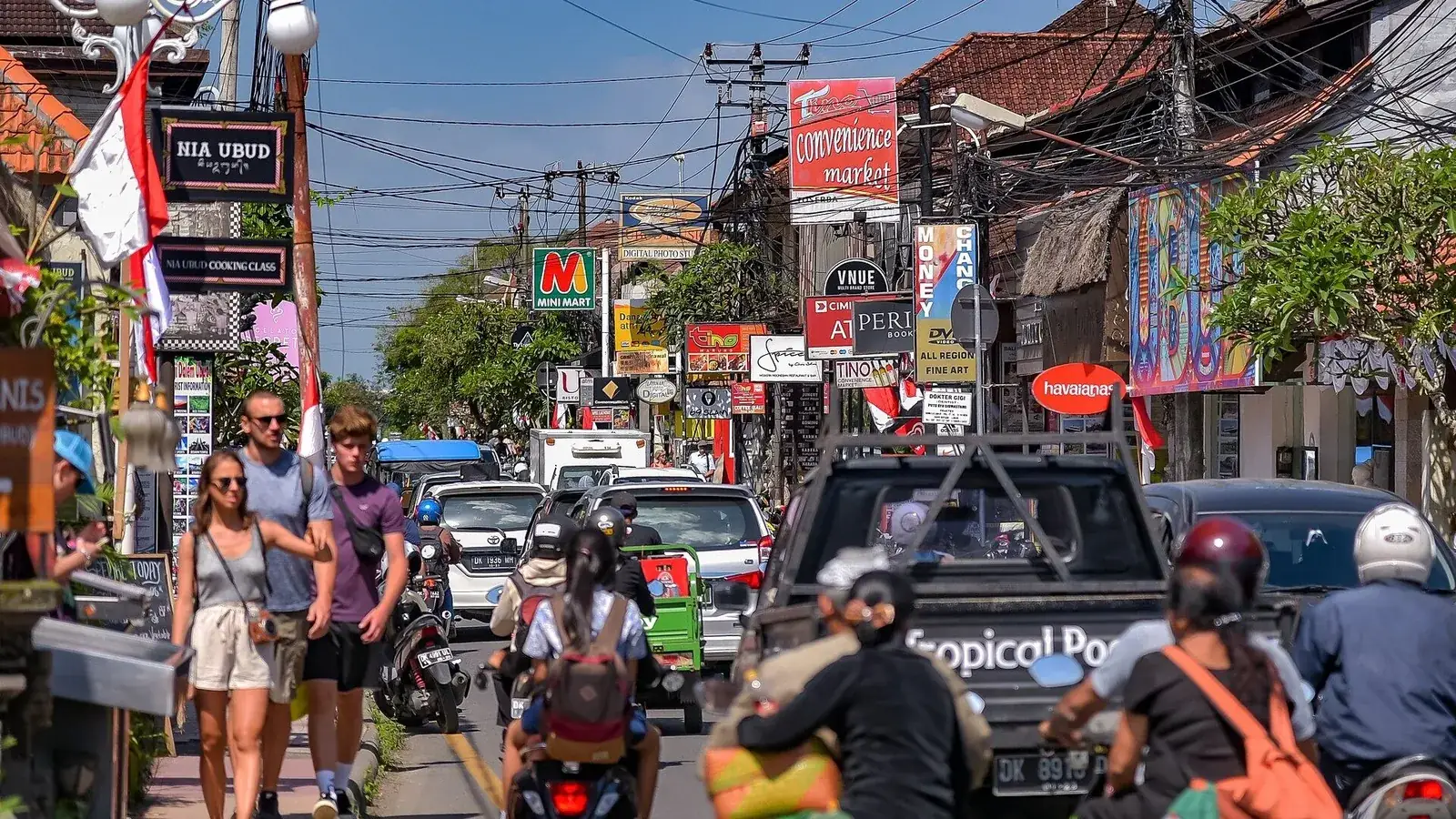
Against: Canggu has become pricey and crowded · chaotic scooter traffic in the nomad areas · advanced healthcare means a trip to Singapore · the E33G needs high income (~US$ 60k/yr) · visa bureaucracy can be slow.
Is it worth it?
For anyone who works remotely and wants nature, community and friendly costs, Bali is hard to beat, and the nomad visa with foreign-income exemption made the math even more attractive. The secret is the usual one: pick the right village, enter through the visa route that serves you, and settle the tax question before you fly.
City guide: get to know Bali from the inside, from Canggu to Ubud, where to stay, what to do and the nomad life on the island.
Ready for the next step? The Rota Ásia quiz matches your profile, budget and lifestyle and hands you a tailored plan: your city, the ideal visa route, the cost and the taxes, straight to your inbox.
Frequently asked questions
Does Indonesia’s nomad visa exempt my foreign income?
Yes. The E33G (Remote Worker Visa) was designed to exempt foreign-source income, if you earn from abroad, that income isn’t taxed in Indonesia. It’s one of the visa’s biggest draws.
How much income does the E33G require?
About US$ 60k per year, proven, plus a job or contract with a foreign company. It’s one of the highest income requirements in the region.
How much does it cost to live in Bali?
In Ubud you can live on US$ 1,000 to 1,400 a month; busier Canggu runs US$ 1,300 to 1,800. Eating at local warung and renting on the ground (not online) cuts costs a lot.
Can I bring my dog or cat to Bali?
Bringing dogs and cats into Bali is extremely restricted (the island had rabies outbreaks) and, in practice, banned or heavily limited. If you have a pet and want Bali, sort this out at the very start of your planning.
Essential tools for the move
This page contains affiliate links: you pay nothing extra and you help keep Rota Ásia running.
- InsuranceSafetyWingHealth insurance for nomads, covers you across several countries at once.See insurance ↗
- eSIM / dataAiraloA digital eSIM so you have internet the moment the plane lands.Get an eSIM ↗
- ToursGetYourGuideTours, day trips and experiences at your destination.See tours ↗
- MoneyWiseMulti-currency account and fair exchange to get paid from abroad and spend at your destination.Discover Wise ↗
- StaysAgodaAsia’s giant for accommodation, usually the best prices in the region.See on Agoda ↗
- StaysBooking.comBook your first days before locking in a monthly rental on the ground.Find a place to stay ↗
Find your city in Asia
Stop guessing. Answer for 2 minutes and get a plan with your city, visa route, cost and taxes, straight to your inbox.
Start now →