
Living in Thailand: visas, cost of living and cities (2026)
The complete guide: the 5-year DTV visa, what it costs to live in Chiang Mai, where to live, the food, the taxes and a step-by-step for your first 30 days.
Seven in the evening in Chiang Mai. You close the laptop at a café that pours the best cappuccino you’ve had, hop on the scooter and ride down to the night market. Ten minutes later, a steaming bowl of khao soi, a mango juice and a dessert add up to less than five dollars. Around you, people from thirty countries who made the same choice: trade the high cost and the grey of the West for sun, unreal food and money that stretches three times further. For most newcomers, Thailand is the easiest gateway to living in Asia: and, since the DTV, more accessible than ever.
You’ve probably heard you “need to prove a lot of money”, that “you can only stay as a tourist” or that “it’s way too complicated”. This guide shows, with numbers and no folklore, why none of that has to stop you.
A visa is not a tax. They’re two different things, decided by different rules. Mixing them up is the mistake that makes people give up when they didn’t need to.
Why Thailand
- The DTV changed the game: a 5-year remote-work visa, something very rare in the region.
- Legendary value: one of the best in the world if you earn in a strong currency.
- Food from another planet: cheap, varied and addictive, on the street and in restaurants.
- The biggest nomad community in Asia: Chiang Mai is the unofficial capital of remote work.
- International-standard healthcare: excellent hospitals at prices far below Western ones.
- Air hub: from Bangkok, all of Southeast Asia is one cheap flight away.
Thailand’s visas
There are far more paths than the tourist visa. These are the main ones for people who actually want to stay:
| Visa | For whom | Duration | What it requires |
|---|---|---|---|
| DTV (Destination Thailand Visa) | Digital nomad, freelancer, workcation | 5 years (entries of up to 180 days) | ~฿500,000 in savings + a ฿10,000 fee |
| ED (Education) | Studying Thai, Muay Thai, etc. | 1 year, renewable | Enrollment at an accredited school |
| LTR (Long-Term Resident) | High income / skilled professional | 10 years | Income tiers or investment |
| Thailand Privilege (ex-Elite) | Those who want convenience by paying | 5 to 20 years | Membership fee (from ฿650,000) |
| Retirement | 50 or older | 1 year, renewable | Proof of income or savings |
The DTV is the one that changed the game most for remote workers: five years of validity, and the required balance (about US$ 14k) is savings that sit in your account, not money you spend. It also lets you study, get medical treatment and bring dependents.
Not sure which of these routes fits your profile? That’s exactly what the quiz sorts out in 2 minutes.
What it costs to live, the real budget
Thailand has one of the best value ratios in Asia. Here’s a realistic monthly budget for one person in Chiang Mai, living well:
| Item | Cost/month (USD) |
|---|---|
| Rent (modern studio/1-bed with pool and gym) | 300 to 500 |
| Food (mixing street food and cooking) | 200 to 350 |
| Transport (scooter + Grab) | 40 to 80 |
| Internet + phone | 20 to 35 |
| Coworking / cafés | 60 to 120 |
| Leisure, gym, extras | 150 to 300 |
| Total | ~US$ 1,000 to 1,400 |
Comparing across cities:
| City | Monthly spend | Profile |
|---|---|---|
| Chiang Mai | US$ 1,000 to 1,400 | Calm, cheap, nomad community |
| Bangkok | US$ 1,300 to 1,800 | Metropolis, everything on hand, pricier |
| Phuket / Koh Samui | US$ 1,200 to 1,600 | Beach, tourism, seasonal |
| Hua Hin | US$ 1,000 to 1,400 | Quiet beach, close to Bangkok |
Eating on the street in Thailand is delicious and costs a couple of dollars, that’s where much of the saving lives. The money “leak” is living off Western restaurants and delivery.

Where to live
Chiang Mai: up north, mountainous and green. It’s the unofficial capital of digital nomads: cheap, safe, with great internet, cafés to work from and a huge community of foreigners. The best starting point, neighborhoods like Nimman (modern, cafés) and the Old City (temples, charm).
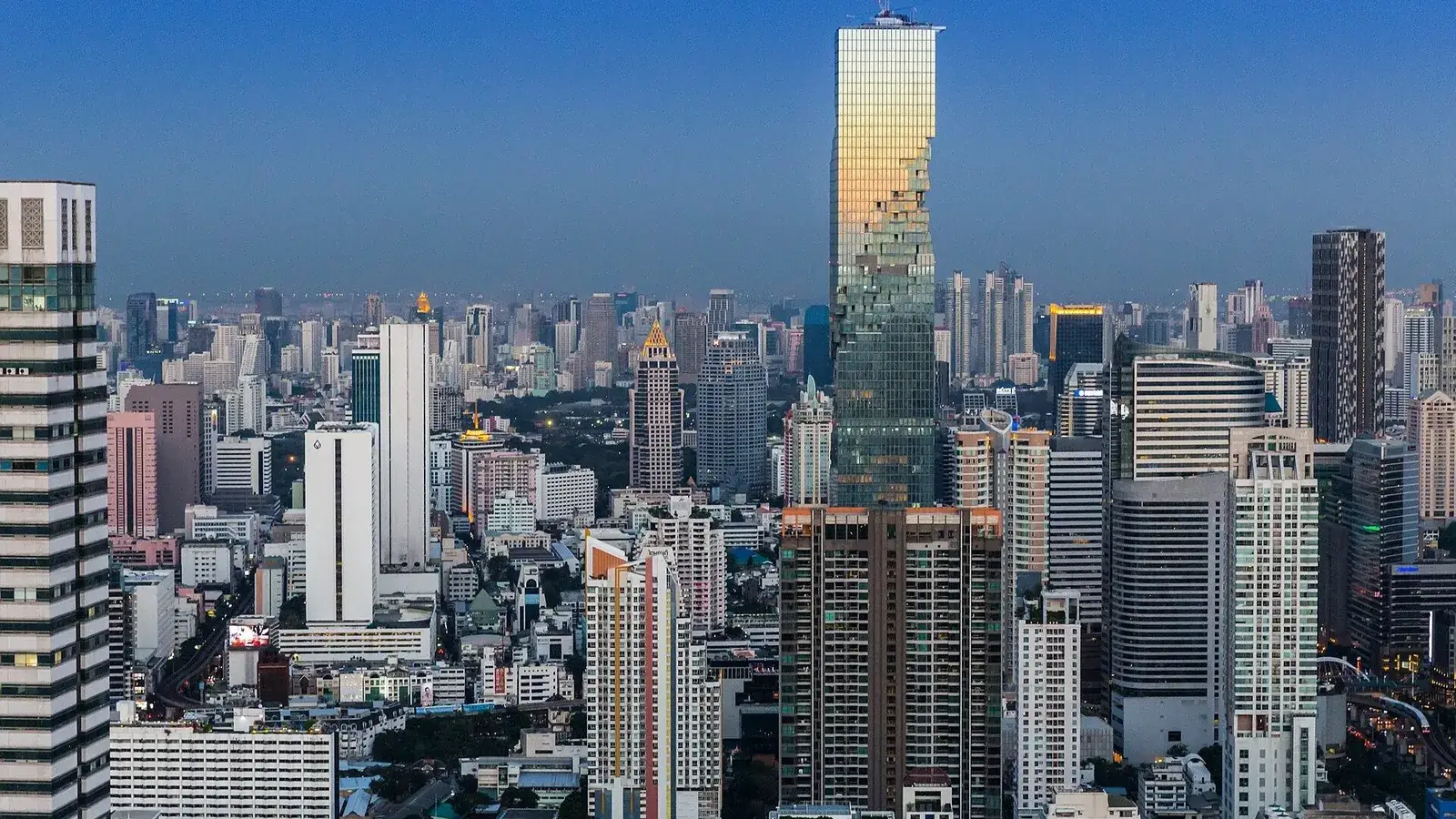
Bangkok: the metropolis. Chaotic, alive, with first-rate transport (BTS/metro), excellent hospitals and cheap flights to the rest of Asia. Ideal if you want a big city and connections.
Phuket and Koh Samui: the famous beaches. Good for a season, more touristy and seasonal. Prices rise in high season.
Koh Phangan: the more alternative island, slow-paced and seaside. It has become a hub for remote workers who want nature.
Hua Hin: a quiet beach a few hours from Bangkok, popular with families and retirees.
The food, half the reason
Thai cuisine is one of the most loved in the world, and in its own country it costs almost nothing. The corner pad thai, the som tam (spicy papaya salad), the khao soi (the northern curry-noodle dish), the massaman, the mango sticky rice. Street stalls are specialists, each makes one dish, and makes it very well, and a full meal costs a couple of dollars. Eating is cheap, safe and social; it’s where life happens.
A typical day
Breakfast of tropical fruit and an iced latte at a Nimman café. A morning of work on fast fiber and air conditioning. For lunch, a khao soi for a couple of dollars. In the afternoon, a workout, a Thai massage (for under ten dollars) or a hike to a waterfall. At night, the night market: food, juices, people from all over. Simple, sunny, cheap, and with plenty of time left to actually live.
What no one tells you: taxes
Here’s the part that separates the people who plan from the people who get a nasty surprise. Having a visa to live somewhere doesn’t mean you pay tax there, and it doesn’t mean you’ve stopped owing tax back home.
In Thailand, the practical rule:
- You become a tax resident if you spend 180 days or more in the country within the year.
- As a resident, Thailand taxes the foreign income you remit into the country, on progressive brackets (from 0% to 35%).
- What stays outside and isn’t remitted generally isn’t taxed, but the rules have been tightening; don’t treat it as a guarantee.
And on the home side: until you file your formal tax exit, your home country still considers you a tax resident, and your income can be taxed there even while you live abroad.
Getting there
There’s no direct flight to Thailand from the Americas. You always connect through a big hub into Bangkok (BKK):
- Via Doha (Qatar Airways) or Dubai (Emirates): the most frequent, most direct routes.
- Via Europe (Paris, Amsterdam, Istanbul), often shows up in good deals.
- From Bangkok, dirt-cheap flights link Chiang Mai, the islands and all of Southeast Asia.
First 30 days, the arrival plan
- Before you fly: eSIM (Airalo), nomad insurance sorted, first nights booked.
- Week 1: buy a local SIM (AIS/True), see 2 to 3 neighborhoods in person, test the work cafés and rent a scooter (carefully).
- Week 2: lock in the monthly rental, map out hospitals and coworkings, settle into the rhythm of the markets.
- Weeks 3 to 4: routine in place; if you’re on the DTV, organize the paperwork and deadlines with your facilitator.
The practical stuff from people who went
- Health insurance: always advisable and required for several visas. Bangkok has international-standard hospitals at prices far below Western ones.
- Transport: a scooter for daily life (carefully), Grab for the rest; Bangkok has the metro/BTS.
- Money: an international card with a good exchange rate to withdraw and pay; a local account with a long-stay visa.
- Internet: an eSIM covers the first month; then a very cheap local plan and fast fiber.
- Language: you can get by in English in tourist areas; learning basic Thai opens doors (and can become your visa, via the ED).
Culture and etiquette in 30 seconds
Thais value calm and courtesy, losing your temper in public “makes you lose face”. Greet with the wai (palms together), take your shoes off entering homes and temples, cover shoulders and knees at sacred sites, and never disrespect images of the King or the Buddha. Smile: it’s the country’s social currency.
Pros and cons, unfiltered
For: the 5-year DTV · legendary value · the biggest nomad community in Asia · exceptional food · cheap first-world healthcare · air hub.
Against: tax on remitted income if you stay 180+ days · the DTV needs ~US$ 14k sitting “idle” · Chiang Mai has the burning season (Mar to Apr, bad air) · some islands suffer from over-tourism · heat and humidity year-round.
Is it worth it?
For anyone who works remotely, wants quality of life and doesn’t want to spend a fortune, Thailand is one of the best choices on the planet, and today, with the DTV, more accessible than ever. The secret is to arrive informed: pick the right city, the visa route that trips you up the least, and settle the tax question before you fly.
City guides: get to know Chiang Mai and Bangkok from the inside, neighborhoods, what to do, food and where to stay.
Ready for the next step? The Rota Ásia quiz matches your profile, budget and lifestyle and hands you a tailored plan: your city, the ideal visa route, the cost and the taxes, straight to your inbox.
Frequently asked questions
How much does the Thai DTV visa cost?
The DTV fee is around ฿10,000, and it requires savings of roughly ฿500,000 (~US$ 14k) in your account, not money you spend, but a balance held as proof. It’s valid for 5 years.
Does Thailand tax the income I earn from abroad?
Only if you spend 180 days or more in the country in a year (becoming a tax resident), and even then, only the income you remit into Thailand, on brackets from 0% to 35%. What stays outside and isn’t remitted is generally not taxed.
Can I work remotely in Thailand on a tourist visa?
Working for clients outside the country is a grey zone that’s almost never enforced, but it isn’t officially legal. The DTV visa was created precisely to give legal footing to remote workers.
How much do I need per month to live in Thailand?
In Chiang Mai you can live well on US$ 1,000 to 1,400 a month; Bangkok runs US$ 1,300 to 1,800. Eating on the street and using a scooter/public transport keeps costs low.
Essential tools for the move
This page contains affiliate links: you pay nothing extra and you help keep Rota Ásia running.
- InsuranceSafetyWingHealth insurance for nomads, covers you across several countries at once.See insurance ↗
- eSIM / dataAiraloA digital eSIM so you have internet the moment the plane lands.Get an eSIM ↗
- ToursGetYourGuideTours, day trips and experiences at your destination.See tours ↗
- MoneyWiseMulti-currency account and fair exchange to get paid from abroad and spend at your destination.Discover Wise ↗
- StaysAgodaAsia’s giant for accommodation, usually the best prices in the region.See on Agoda ↗
- StaysBooking.comBook your first days before locking in a monthly rental on the ground.Find a place to stay ↗
Find your city in Asia
Stop guessing. Answer for 2 minutes and get a plan with your city, visa route, cost and taxes, straight to your inbox.
Start now →