
Bangkok
The city that never sleeps: golden temples next to skyscrapers, the best street food in the world, top-class transport and cheap flights across Asia.
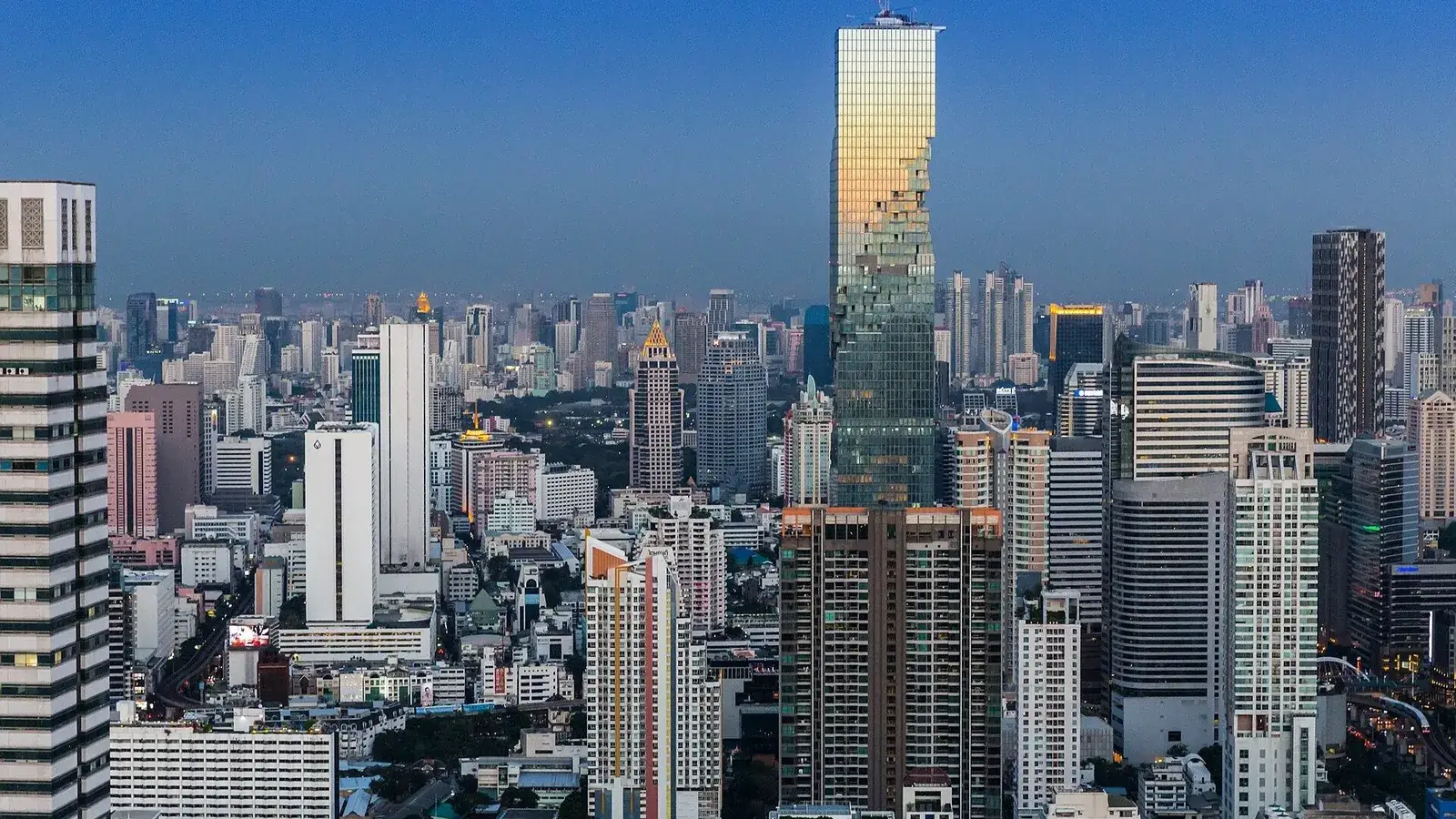
Let me drop you into the middle of Bangkok. You step off the Skytrain (the BTS, modern and ice-cold) and down to the street: the heat hugs you, the smell of grilled skewers drifts from a sidewalk stall, a tuk-tuk honks, and above it all a golden temple shares the skyline with glass towers. Within a hundred meters, you eat the best pad thai of your life for a dollar, have a drink on a 50th-floor rooftop and pray in a 200-year-old temple. Bangkok is chaos and comfort in the same breath: intense, delicious, and surprisingly easy to live in.
Bangkok in 30 seconds
It’s the capital of Thailand and one of Asia’s great hubs: huge, vibrant and full of contrasts. It has the best street food on the planet, excellent public transport (BTS and metro), international-standard hospitals and an airport that takes you cheaply to any corner of the continent. It’s pricier and busier than Chiang Mai, but delivers metropolis life at a friendly price.
Where to stay, walking you through the neighborhoods
Sukhumvit (Thonglor, Ekkamai, Phrom Phong): the expat and nomad heart. Cafés, coworkings, restaurants from all over, gyms and nightlife, all linked to the BTS. Practical and modern, the most common choice for newcomers.
Ari: a local, hip neighborhood, with charming cafés, tree-lined streets and less tourism. The pick for anyone who wants a neighborhood feel without giving up convenience.
Silom / Sathorn: the financial district, by the river, with rooftops, hotels and a more corporate feel by day, lively at night.
Riverside / Old City (Rattanakosin): near the great temples and the Chao Phraya River, more historic and touristy. Charming, but farther from the BTS.
The must-dos, what to do
- Grand Palace + Wat Pho + Wat Arun: the trio of iconic temples, side by side in the Old City. Go early and dressed respectfully (shoulders and knees covered).
- Chatuchak Market: one of the biggest weekend markets in the world; everything from crafts to food, in an endless maze.
- Rooftop bars: Bangkok is the world capital of rooftop bars; a drink with the city glittering at your feet is a must.
- Street-food tour in Chinatown (Yaowarat): at night, a festival of stalls and frying; come hungry.
- Canal (khlong) boat ride: the “Venice of the East” still lives in the canals; a quieter side of the city.
- Day trip to Ayutthaya: the ruins of the old capital, an hour by train.
The food, the best street food in the world
No exaggeration: for many, Bangkok has the best street food on the planet, there are even Michelin-starred sidewalk stalls. The pad thai, the boat noodles, the som tam (spicy papaya salad), the mango sticky rice, the khao man gai (chicken with rice)… all fresh, cheap and made to order. Save the nights for Chinatown and the mornings for the markets. Eating here is a daily adventure, and one of the cheapest of your life.
A perfect day in Bangkok
Breakfast at a hip Ari café, a morning of work at a coworking with fast fiber. For lunch, boat noodles at a stall beside the canal. In the afternoon, the BTS takes you to a temple or an ice-cold mall to escape the heat. At dusk, a rooftop to watch the sun drop between the towers. At night, Chinatown: smoke, neon lights, frying and cold beer. You head home by metro, exhausted and enchanted, already planning the next day.
What it costs and the practical stuff
You live well on US$ 1,070 to 1,820 a month: a modern apartment near the BTS costs US$ 400 to 700, eating on the street costs a couple of dollars, and public transport is excellent. Bangkok is also one of the best places in the world for healthcare: hospitals like Bumrungrad are an international reference at prices far below Western ones.
Getting around
- BTS (Skytrain) and MRT (metro): modern, cold and punctual; the best way to move around.
- Grab / Bolt: cheap ride apps for stretches off the train.
- River and canal boats: fast and cheap for the historic side.
- Tuk-tuk: fun for short hops (agree the price first).
Is Bangkok worth living in?
If you want a big city, convenience, incredible food and flight connections: with first-world healthcare and a friendly cost, Bangkok is unbeatable. It’s more intense and pricey than Chiang Mai, but delivers metropolis life at a fraction of Western prices. Ideal for anyone who loves urban energy.
Bangkok is one of the cities in the Thailand guide, where you’ll find the visas (including the 5-year DTV), the taxes and the other cities.
This page contains affiliate links: you pay nothing extra and you help keep Rota Ásia running.
From Brazil to Bangkok
The easiest gateway. From Bangkok, cheap flights (AirAsia) take you to Chiang Mai, the islands and the whole region.
Price checked on Skyscanner in August 2026, economy, return from São Paulo. Fares move with the season: use it as a starting point and confirm in the search. Compare with the other destinations.
Leaving Bangkok
17 destinations| Chiang Mai | bus · private transfer · train |
|---|---|
| Phnom Penh | bus · private transfer · minivan |
| Siem Reap | bus · private transfer · minivan |
| Penang | bus · minivan |
| Kuala Lumpur | bus |
Bali, Busan, Cebu, Colombo, Da Nang, Hanoi, Ho Chi Minh (Saigon), Osaka, Seoul, Singapore, Taipei, Tokyo.
Routes served by 12Go, the platform most used for buses, trains and ferries across Southeast Asia.
Once you are in Bangkok
To get around, rent a scooter. For things to do, see the tours and day trips.
Finding a place in Bangkok
A portal is for landing with a sense of prices, not for signing a lease. A listing in English is an agent talking to a foreigner, with their commission baked in. To land knowing the range, start with DDproperty, Thailand-Property and Hipflat.
Resident groups on Facebook (search the city name with "expats", "nomads" or "housing"), signs on the street, and a word with the building manager. This is the stock that never reaches a portal, and where the price gap lives.
In Bangkok and Chiang Mai the cheapest route is to pick the building first and talk to the juristic office. Many units never reach a portal at all.
Do not sign a lease from abroad. Book the first weeks, walk the neighbourhoods, and only then commit. The most common scams and what to check before you sign are in Renting without getting burned.
Essential tools for the move
- InsuranceSafetyWingHealth insurance for nomads, covers you across several countries at once.See insurance ↗
- eSIM / dataAiraloA digital eSIM so you have internet the moment the plane lands.Get an eSIM ↗
- ToursGetYourGuideTours, day trips and experiences at your destination.See tours ↗
- MoneyWiseMulti-currency account and fair exchange to get paid from abroad and spend at your destination.Discover Wise ↗
Find your city in Asia
Stop guessing. Answer for 2 minutes and get a plan with your city, visa route, cost and taxes, straight to your inbox.
Start now →