

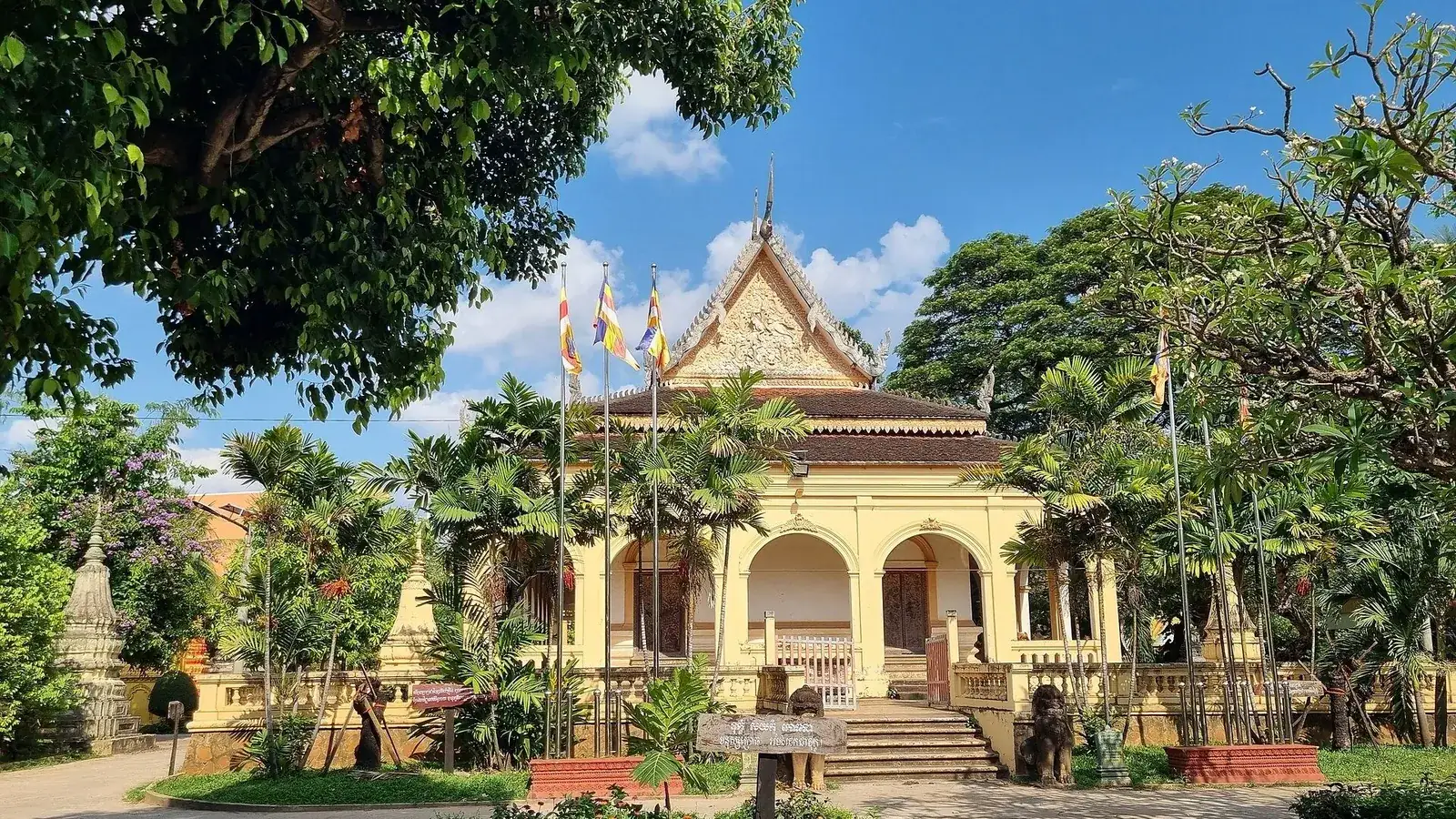
Siem Reap
The calm, dirt-cheap base next to Angkor Wat: a slow pace, a welcoming nomad community, first-rate Western cafes for pennies, and thousand-year-old temples in your backyard.
Let me drop you into the middle of Siem Reap. You wake before sunrise, take a tuk-tuk down the dark road, and reach Angkor Wat in time to watch the largest religious monument in the world cut against a brightening sky. Back in town, the day is slow: a first-rate Western cafe for a couple of dollars, good wi-fi, a pool for the midday heat. At night, Pub Street lights up, but turn one corner and you’ll find a quiet Khmer restaurant and a nomad community that knows each other by name. Siem Reap is cheap peace next to one of the wonders of the world: small, warm, and surprisingly comfortable.
Siem Reap in 30 seconds
It’s the gateway town to the Angkor temple complex, in northwestern Cambodia: small, calm, and one of the cheapest bases in Asia. It grew to host the world coming to see Angkor Wat, so it has good tourist infrastructure, good cafes, coworking spaces, decent hospitals, and international flights, but keeps a slow pace and a cost of living so low it’s startling. It’s the choice for those who want to genuinely save without giving up comfort.
Where to live, a tour of the neighborhoods
Center / Old Market (Psar Chas): the tourist heart, near Pub Street, the cafes, and the river. Convenient and lively, but noisier at night.
Wat Bo: the favorite of expats and nomads: across the river, calm, leafy, with charming guesthouses and quiet cafes. The best balance.
Sala Kamreuk / Svay Dangkum: more local, cheaper residential areas, a few minutes by bike from downtown.
Rural outskirts: those after a villa with a pool and total silence find spacious homes for very little, ten minutes from the center.
The must-dos, what to do
- Angkor Wat at sunrise: the obligatory classic; the largest religious monument in the world revealing itself at dawn.
- Angkor Thom and the Bayon: the walled city and the hundreds of stone faces smiling from the temple.
- Ta Prohm: the “Tomb Raider temple,” swallowed by giant fig-tree roots.
- Banteay Srei: the pink sandstone temple, the most delicately carved of them all.
- Tonlé Sap Lake: the floating villages and the largest freshwater lake in Southeast Asia.
- Phare, the Cambodian Circus: a moving show performed by young people from social projects; unmissable at night.
The food, gentle Khmer and cheap coffee
Khmer cuisine is milder and less spicy than its neighbors’. Amok (a creamy fish curry cooked in a banana leaf) is the national dish; lok lak (stir-fried beef with a lime-and-pepper sauce) is the everyday favorite; and the markets serve num pang (the French-influenced sandwich) for pennies. Add a surprising scene of Western cafes and restaurants at rock-bottom prices, and you eat very well in Siem Reap while spending almost nothing.
A perfect day in Siem Reap
Sunrise at Angkor, breakfast at a hip Wat Bo cafe, a morning of work on calm wi-fi. For lunch, a creamy amok by the river. In the afternoon, escape the heat in a pool or with a dirt-cheap Khmer massage. At dusk, a bike ride through the rice paddies on the outskirts. At night, a quiet Khmer dinner and, if you have the energy, Pub Street or the Phare circus. You take a tuk-tuk home, under the stars, through a town that sleeps early.
What it costs and the practical stuff
You live comfortably on US$ 740 to 1,130 a month: and you can spend a lot less. A good apartment runs US$ 300 to 500, often with a pool; Khmer food costs a couple of dollars, and even the Western cafes are cheap. It’s one of the most economical bases in Asia. What you trade away is scale: a small town, fewer options, and a smaller (though warm) nomad community.
Getting around
- Tuk-tuk (PassApp / Grab app): dirt cheap and everywhere; the standard way to get around.
- Bicycle: the town is small and flat; the best way to get to know the neighborhoods.
- Scooter: easy to rent by the month for full autonomy.
- On foot: the center and the Old Market are walkable.
Is Siem Reap worth living in?
If you want to genuinely save, at a slow, warm pace, with thousand-year-old temples in your backyard and a welcoming nomad community, Siem Reap is unbeatable. Don’t expect the buzz or the variety of a metropolis, the charm is precisely in the peace and the price. Ideal for those who want to slow down, save, and live next to one of the wonders of the world.
Siem Reap is one of the cities in the Cambodia guide, where you’ll find the visas, the taxes, and the other cities.
This page contains affiliate links: you pay nothing extra and you help keep Rota Ásia running.
From Brazil to Siem Reap
Almost everyone arrives through Bangkok, a ~1h flight. From Phnom Penh it is under 1h in the air, or ~6h by bus.
Price checked on Skyscanner in August 2026, economy, return from São Paulo. Fares move with the season: use it as a starting point and confirm in the search. Compare with the other destinations.
Leaving Siem Reap
12 destinations| Bangkok | bus · private transfer · minivan |
|---|---|
| Ho Chi Minh (Saigon) | bus · private transfer · minivan |
| Phnom Penh | bus · private transfer · minivan |
Bali, Chiang Mai, Da Nang, Hanoi, Kuala Lumpur, Penang, Seoul, Singapore, Cebu.
Routes served by 12Go, the platform most used for buses, trains and ferries across Southeast Asia.
Once you are in Siem Reap
To get around, rent a scooter. For things to do, see the tours and day trips.
Finding a place in Siem Reap
A portal is for landing with a sense of prices, not for signing a lease. A listing in English is an agent talking to a foreigner, with their commission baked in. To land knowing the range, start with Realestate.com.kh.
Resident groups on Facebook (search the city name with "expats", "nomads" or "housing"), signs on the street, and a word with the building manager. This is the stock that never reaches a portal, and where the price gap lives.
Do not sign a lease from abroad. Book the first weeks, walk the neighbourhoods, and only then commit. The most common scams and what to check before you sign are in Renting without getting burned.
Essential tools for the move
- InsuranceSafetyWingHealth insurance for nomads, covers you across several countries at once.See insurance ↗
- eSIM / dataAiraloA digital eSIM so you have internet the moment the plane lands.Get an eSIM ↗
- ToursGetYourGuideTours, day trips and experiences at your destination.See tours ↗
- MoneyWiseMulti-currency account and fair exchange to get paid from abroad and spend at your destination.Discover Wise ↗
Find your city in Asia
Stop guessing. Answer for 2 minutes and get a plan with your city, visa route, cost and taxes, straight to your inbox.
Start now →