

Singapore
The most efficient city-state on earth: tropical first world, Michelin-starred hawker centres, a flawless metro, and a passport to all of Asia, at a matching price.
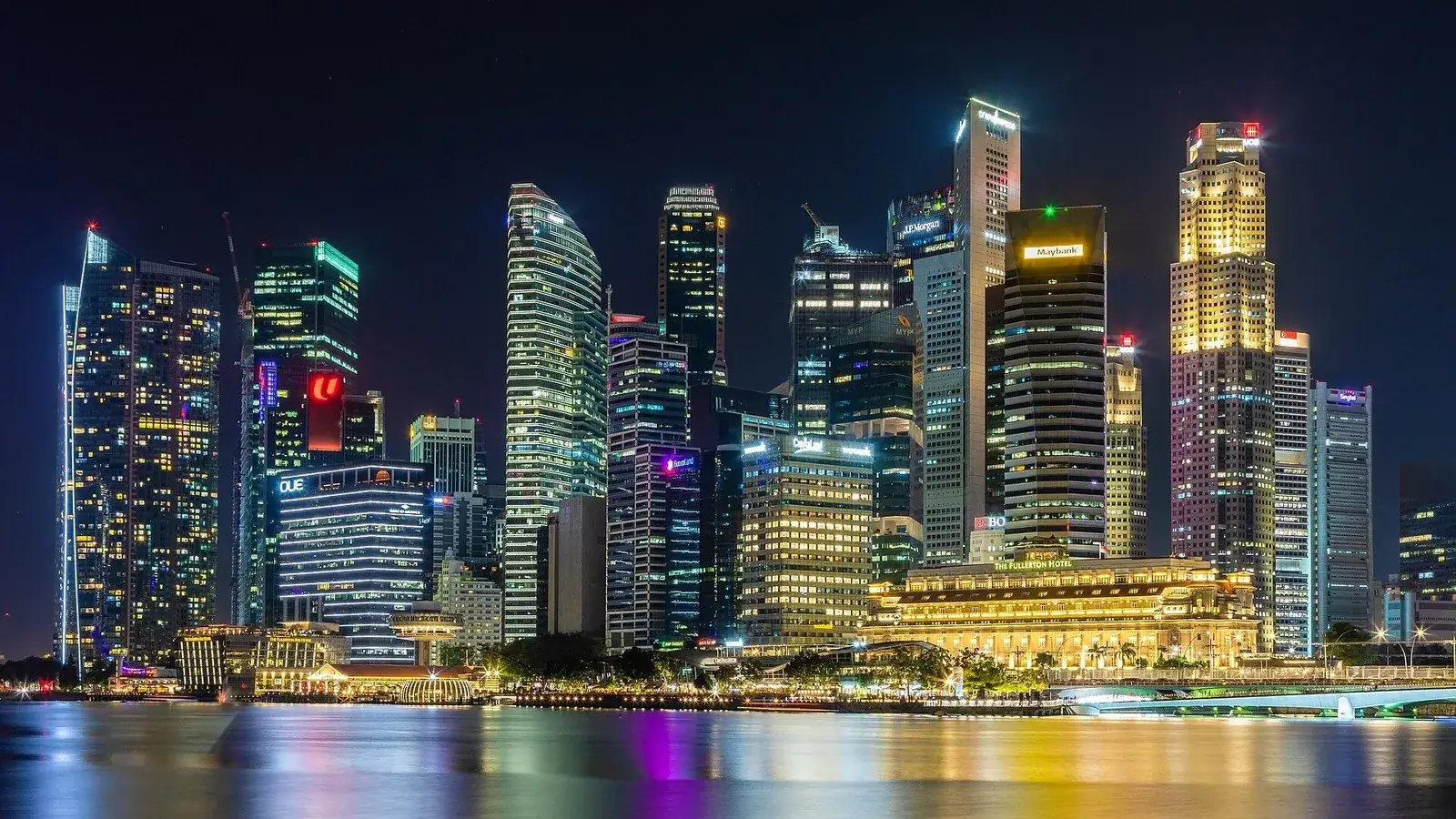
Let me drop you into the middle of Singapore. You step off an air-conditioned, silent metro, past a vertical garden climbing a skyscraper, and sit down at a hawker centre where an award-winning plate of chicken rice costs a couple of dollars. At night, the giant trees of Gardens by the Bay light up, planes land nonstop at one of the world’s most awarded airports, and you realize: here, everything simply works. Singapore is the first world in a tropical edition: clean, safe, green, and absurdly efficient. The price of that perfection is precisely the price.
Singapore in 30 seconds
It’s a city-state at the heart of Southeast Asia: tiny in territory, giant in influence. It’s Asia’s great financial, aviation, and logistics hub, with one of the highest standards of living in the world, flawless safety, top-tier healthcare, perfect transport, and a fascinating blend of Chinese, Malay, Indian, and Western cultures. It’s expensive, the visas to live here are hard, but those who make it live in one of the most comfortable places on the planet.
Where to live, a tour of the neighborhoods
Tiong Bahru: the charming, hip art deco neighborhood, with bakeries, cafes, and independent bookstores. The darling of the creative class.
Tanjong Pagar / CBD: the financial district, with skyscrapers, rooftops, and corporate life. Central and expensive, for those who want to be in the middle of the action.
Katong / Joo Chiat: the Peranakan heart, with colorful houses, traditional food, and a seaside neighborhood feel. Charming and a bit more affordable.
Holland Village / Bukit Timah: green, residential areas popular with expats and families, near parks and international schools.
The must-dos, what to do
- Gardens by the Bay: the iconic “Supertrees” and futuristic domes; unmissable during the nightly light show.
- Marina Bay Sands and the skyline: the postcard shot; go up to the observation deck or admire it from the waterfront.
- Hawker centres (Maxwell, Lau Pa Sat, Old Airport Road): the city’s soul; award-winning street food for pennies.
- Chinatown, Little India, and Kampong Glam: three neighborhoods, three cultures, in a short radius; temples, mosques, and markets.
- Sentosa: the island of beaches, parks, and fun, a step from downtown.
- Trails and reserves (MacRitchie, Southern Ridges): green Singapore, full of monkeys and rainforest inside the city.
The food, hawker centres and Michelin stars
Eating in Singapore is a democratic religion. The hawker centres: popular food courts, serve some of the best dishes in Asia at trivial prices, and a few have even earned a Michelin star. Chicken rice is almost the national dish; chili crab, laksa, char kway teow, and roti prata round out the festival. It’s the rare wealthy city where you eat wonderfully well while spending very little, as long as it’s at the hawker, not the fancy restaurant.
A perfect day in Singapore
Breakfast with kaya toast and soft-boiled eggs at a traditional coffee shop, a morning of work at a coworking space with ice-cold air conditioning. For lunch, chicken rice at a hawker centre. In the afternoon, a hike at MacRitchie or a dip in the building’s pool. At dusk, a rooftop in Tanjong Pagar to watch the skyline light up. At night, Gardens by the Bay for the light show, and a final plate at Lau Pa Sat. You take the MRT home, punctual, cool, flawless.
What it costs and the practical stuff
Here lies the challenge: Singapore is expensive. A realistic budget runs between US$ 2,500 and 4,000 a month, with rent taking the biggest slice (US$ 1,200 to 2,500 for a room or small apartment). In return, eating at the hawkers is dirt cheap, public transport is great and cheap, and healthcare is top first-world. The tax regime is attractive (low taxes, no capital gains tax), part of the city’s appeal for those who can afford it.
Getting around
- MRT (metro): modern, clean, cheap, and air-conditioned; the best way to get around. Use a transit card.
- Bus: extensive and integrated with the metro on the same card.
- Grab / taxi: easy and reliable, great at night.
- On foot and by bike: the center is walkable and full of covered walkways against sun and rain.
Is Singapore worth living in?
If you want the tropical first world: absolute safety, efficiency, top healthcare, and a hub to the entire world, Singapore is unbeatable. The price is literal: it’s expensive and the visas are hard. It makes sense for those with a skilled job or high income who value comfort, order, and global connection over savings. For that profile, it’s one of the best places on the planet to live.
Singapore is the city in the Singapore guide, where you’ll find the (hard) visas, the taxes, and the reality of living there.
This page contains affiliate links: you pay nothing extra and you help keep Rota Ásia running.
From Brazil to Singapore
The best hub in the region: from Singapore, Bali, Bangkok, KL and the islands are a short, cheap flight away.
Price checked on Skyscanner in August 2026, economy, return from São Paulo. Fares move with the season: use it as a starting point and confirm in the search. Compare with the other destinations.
Leaving Singapore
16 destinations| Kuala Lumpur | bus · private transfer · minivan |
|---|---|
| Penang | bus · private transfer |
Bali, Bangkok, Cebu, Chiang Mai, Colombo, Da Nang, Hanoi, Ho Chi Minh (Saigon), Osaka, Phnom Penh, Seoul, Siem Reap, Taipei, Tokyo.
Routes served by 12Go, the platform most used for buses, trains and ferries across Southeast Asia.
Once you are in Singapore
To get around, rent a scooter. For things to do, see the tours and day trips.
Finding a place in Singapore
A portal is for landing with a sense of prices, not for signing a lease. A listing in English is an agent talking to a foreigner, with their commission baked in. To land knowing the range, start with PropertyGuru and 99.co.
Resident groups on Facebook (search the city name with "expats", "nomads" or "housing"), signs on the street, and a word with the building manager. This is the stock that never reaches a portal, and where the price gap lives.
Singapore is the region’s exception: the market is formal, portals rule, and a room in a shared flat is what most budgets actually fit.
Do not sign a lease from abroad. Book the first weeks, walk the neighbourhoods, and only then commit. The most common scams and what to check before you sign are in Renting without getting burned.
Essential tools for the move
- InsuranceSafetyWingHealth insurance for nomads, covers you across several countries at once.See insurance ↗
- eSIM / dataAiraloA digital eSIM so you have internet the moment the plane lands.Get an eSIM ↗
- ToursGetYourGuideTours, day trips and experiences at your destination.See tours ↗
- MoneyWiseMulti-currency account and fair exchange to get paid from abroad and spend at your destination.Discover Wise ↗
Find your city in Asia
Stop guessing. Answer for 2 minutes and get a plan with your city, visa route, cost and taxes, straight to your inbox.
Start now →