
Ho Chi Minh (Saigon)
Vietnam’s economic engine: electric, entrepreneurial and addictive, with the country’s best nightlife, cafés and opportunities, and a sea of scooters that’s a spectacle of its own.
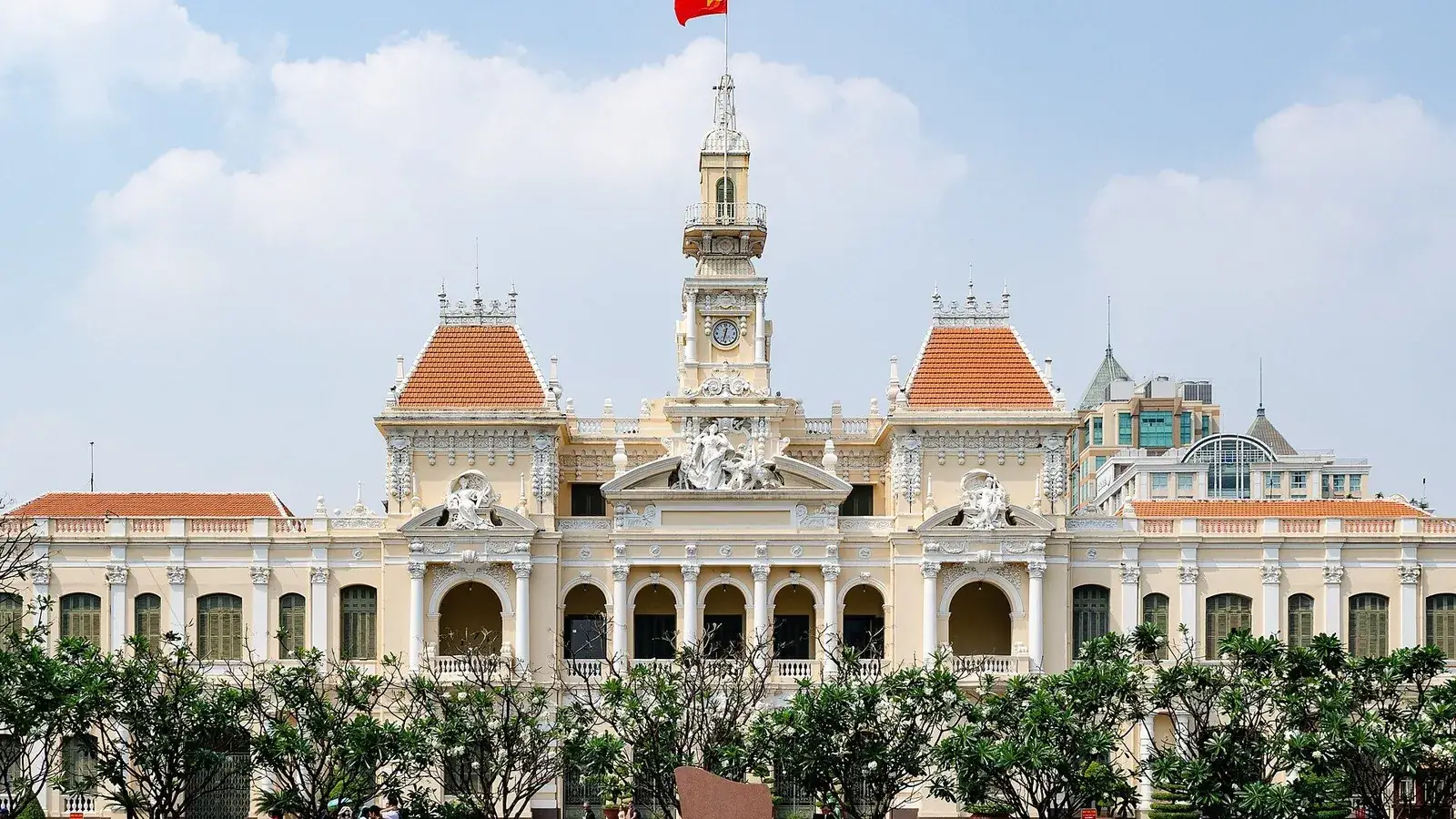
Let me drop you onto a Saigon corner at rush hour. A river of scooters, thousands of them, flows in every direction at once, honking, in a chaos that, in some impossible way, works. You cross the street slowly and steadily (that’s how it’s done), sit on a little plastic chair on the sidewalk and order a ca phe sua da, the strongest, sweetest iced coffee in the world, for a dollar. Around you, French colonial buildings, glass towers and an entrepreneurial energy that never switches off. Ho Chi Minh, which everyone still calls Saigon: is the pulsing, ambitious heart of Vietnam.
Saigon in 30 seconds
It’s Vietnam’s biggest city and its economic engine: intense, hot, chaotic and full of opportunity. It has the country’s best café, restaurant and nightlife scene, a large international community and a low cost (a bit above Da Nang). It’s for people who want metropolis energy and business, less so for those seeking quiet.
Where to stay, walking you through the neighborhoods
Thao Dien (District 2): the enclave of expats and nomads: calmer, leafy, by the river, full of cafés, brunches, coworkings and international restaurants. The most comfortable choice for newcomers.
District 1 (center): the tourist and corporate heart: the colonial buildings, the rooftops, the Bui Vien party street and the biggest concentration of everything. Central and vibrant, the priciest.
District 3: right next to the center, more local and authentic, with hidden cafés and real Saigon life, at a lower price.
Binh Thanh: local and cheaper, near the center, with new buildings springing up. Good value for anyone who wants proximity without the D1 price.
The must-dos, what to do
- War Remnants Museum: hard and essential for understanding the country’s history; you leave thoughtful.
- Notre-Dame Cathedral and Central Post Office: the French colonial architecture at the city’s heart.
- Ben Thanh Market: the iconic market, a bit of everything, good for food and haggling.
- The Cafe Apartment: an entire old building taken over by charming cafés, one in each window; a must-photo.
- District 1 rooftops: Saigon has great high bars, with the city glittering at your feet.
- Day trips: the Cu Chi tunnels (the underground guerrilla) and the Mekong Delta (boats, floating markets, nature).
The food, Saigon on a plate
Saigon’s food is fast, tasty and dirt cheap. The com tam (broken rice with a grilled chop, the city’s signature dish), the banh mi (the best sandwich in the world, for many), breakfast pho, the bun thit nuong (cold noodles with grilled meat). And the coffee: Vietnam is the world’s second-biggest producer, and Saigon takes café culture seriously, from the iced ca phe sua da to the egg coffee. A street meal costs a couple of dollars.
A perfect day in Saigon
An iced coffee on a sidewalk chair and a few hours of work at a hip Thao Dien café (Vietnam’s internet is fast and cheap). Com tam for lunch, for a couple of dollars. In the afternoon, a wander through the Cafe Apartment or a hidden café in District 3. At dusk, a D1 rooftop to watch the city light up. At night, a street market or the buzz of Bui Vien, with bia hoi (the draft beer for pennies) and laughter. Electric, tasty, full of life.
What it costs and the practical stuff
You live well on US$ 750 to 1,340 a month (a bit above Da Nang): a serviced apartment in Thao Dien costs US$ 500 to 800, eating on the street costs a couple of dollars and the scooter is cheap. The internet is fast; for more serious health issues, Saigon has the country’s best hospitals (like the FV), and Bangkok/Singapore are a short flight away.
Getting around
- Grab (bike and car): the easiest, cheapest way to move around without facing the traffic.
- Scooter: the city’s soul, for the experienced (always with a helmet and great care).
- On foot: possible in specific neighborhoods (Thao Dien, parts of D1), but the heat and traffic limit it.
Is Ho Chi Minh worth living in?
For anyone who wants energy, opportunity and Vietnam’s best urban life: cafés, rooftops, entrepreneurship, Saigon is unbeatable, and cheap. It’s more intense and hot than Da Nang, with no beach, but with a vibe that hooks you. Ideal for anyone who loves a metropolis; less so for those seeking calm.
Ho Chi Minh is one of the cities in the Vietnam guide, where you’ll find how the e-visa works, the taxes and the other cities.
This page contains affiliate links: you pay nothing extra and you help keep Rota Ásia running.
Leaving Ho Chi Minh (Saigon)
16 destinations| Hanoi | bus · private transfer · train · minivan |
|---|---|
| Da Nang | bus · private transfer · train |
| Phnom Penh | bus · private transfer · minivan |
| Siem Reap | bus · private transfer · minivan |
Bali, Bangkok, Busan, Cebu, Chiang Mai, Kuala Lumpur, Osaka, Penang, Seoul, Singapore, Taipei, Tokyo.
Routes served by 12Go, the platform most used for buses, trains and ferries across Southeast Asia.
Once you are in Ho Chi Minh (Saigon)
To get around, rent a scooter. For things to do, see the tours and day trips.
Finding a place in Ho Chi Minh (Saigon)
A portal is for landing with a sense of prices, not for signing a lease. A listing in English is an agent talking to a foreigner, with their commission baked in. To land knowing the range, start with Batdongsan and Chợ Tốt Nhà.
Resident groups on Facebook (search the city name with "expats", "nomads" or "housing"), signs on the street, and a word with the building manager. This is the stock that never reaches a portal, and where the price gap lives.
Hanoi and Ho Chi Minh run on neighbourhood word of mouth. Pick your area, walk it, and look for cho thuê (for rent) signs on the street.
Do not sign a lease from abroad. Book the first weeks, walk the neighbourhoods, and only then commit. The most common scams and what to check before you sign are in Renting without getting burned.
Essential tools for the move
- InsuranceSafetyWingHealth insurance for nomads, covers you across several countries at once.See insurance ↗
- eSIM / dataAiraloA digital eSIM so you have internet the moment the plane lands.Get an eSIM ↗
- ToursGetYourGuideTours, day trips and experiences at your destination.See tours ↗
- MoneyWiseMulti-currency account and fair exchange to get paid from abroad and spend at your destination.Discover Wise ↗
Find your city in Asia
Stop guessing. Answer for 2 minutes and get a plan with your city, visa route, cost and taxes, straight to your inbox.
Start now →