

Living in Singapore: visas, cost of living and reality (2026)
The complete guide: why Singapore is Asia’s most powerful hub, the (hard) visas to live there, the high cost and the tax regime that draws those who can afford it.
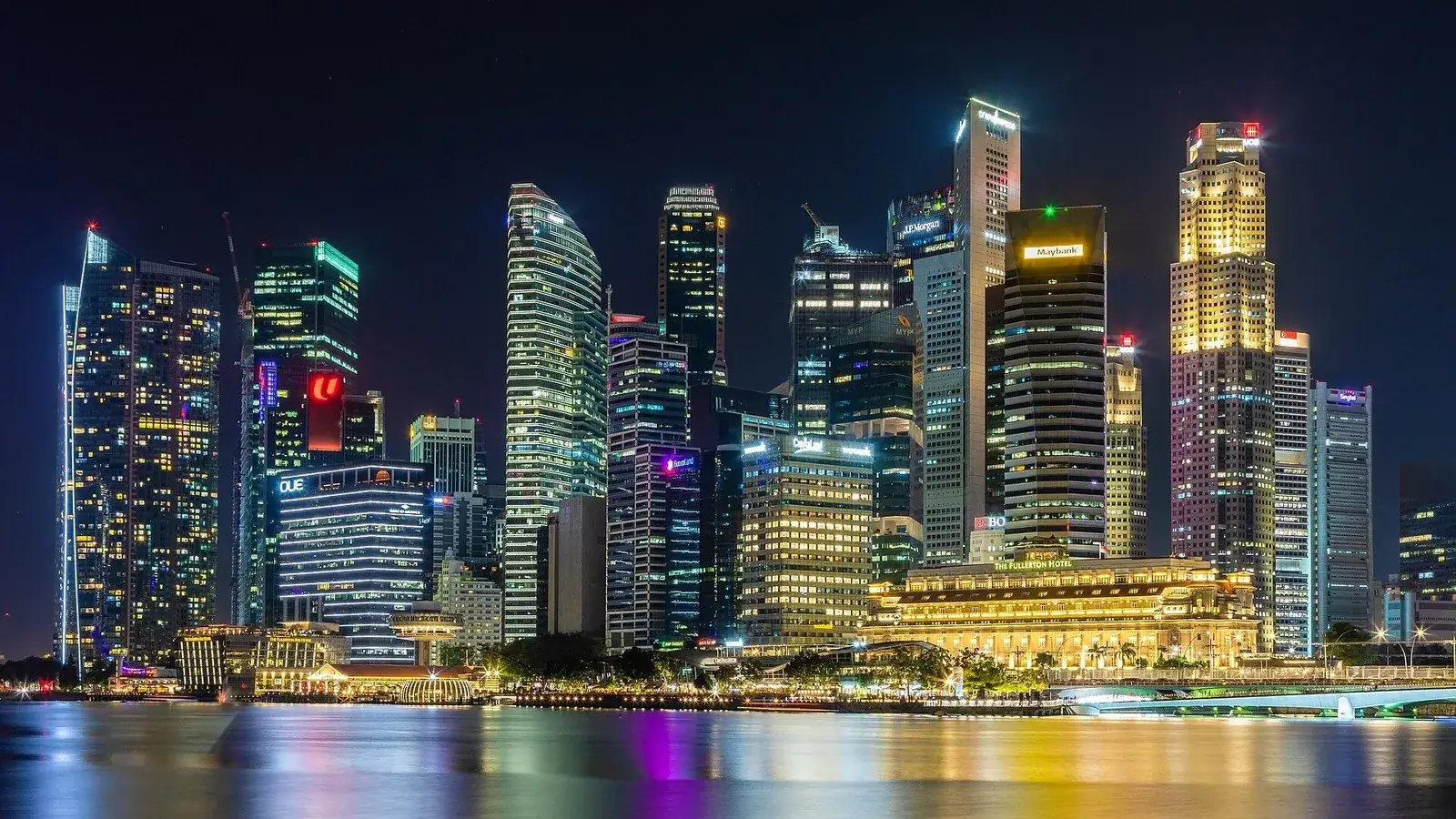
Let me show you Singapore from the top of Marina Bay at dusk. Down below, a city-state that looks like a sci-fi set: the Supertrees lighting up, mirrored skyscrapers, the ship-shaped hotel floating on three towers. You go down and walk streets with not a scrap of litter, where the metro arrives to the second, and within a ten-minute radius you eat restaurant chili crab, food-court chicken rice and an Indian dish, because here, in harmony, live Chinese, Malays, Indians and the whole world. Singapore is Asia’s most efficient, safe and cosmopolitan hub: and also one of the most expensive and demanding places to settle.
I’ll introduce it with a guide’s honesty: Singapore is spectacular to visit and for anyone with a good job or capital, but it isn’t a cheap nomad destination. Understand who it makes sense for.
Singapore is what happens when a country decides to be the best in the world at organization, safety and business, and pulls it off.
Why Singapore
- Official English: one of four official languages; you get by with everything from day one.
- Absolute safety and efficiency: perhaps the best-run city on the planet.
- The great hub: cheap, direct flights to all of Asia; a perfect base for exploring.
- An attractive tax regime: low taxes and foreign income generally untaxed.
- Cosmopolitan and multicultural: food and cultures from everywhere, in harmony.
Singapore’s visas
Here’s the critical point: Singapore has no nomad visa, and the residence routes are built for skilled talent or capital.
| Visa | For whom | Duration | What it requires |
|---|---|---|---|
| Employment Pass (EP) | Professional with a local job | 1 to 2 years, renewable | A job offer + a high minimum salary |
| ONE Pass | Very top-tier talent | 5 years | Very high salary or global reputation |
| EntrePass | Entrepreneur / founder | renewable | An eligible startup + investment |
| Student Pass | University | course duration | Enrollment at an institution |
| Tourism | Visit / test | up to 90 days (many nationalities) | Valid passport |
Notice: nearly every residence path runs through a well-paid job, a business or capital. There’s no “tourist extension” to live for years, as in Cambodia, nor a nomad visa, as in Malaysia. Singapore chooses who comes in, and aims high.
Want to know whether Singapore (or a more affordable option) fits your profile? That’s exactly what the quiz sorts out in 2 minutes.
What it costs to live, the real budget
No sugar-coating: Singapore is expensive: among the most expensive cities in the world, above all for housing and cars. A realistic monthly budget for one person living well (not scraping by, not luxury):
| Item | Cost/month (USD) |
|---|---|
| Rent (room in a shared flat to your own studio) | 1,200 to 2,500 |
| Food (lots of hawker + some restaurants) | 400 to 700 |
| Transport (metro/bus, excellent and cheap) | 60 to 100 |
| Internet + phone | 30 to 50 |
| Coworking / cafés | 150 to 300 |
| Leisure, extras | 300 to 600 |
| Total | ~US$ 2,200 to 4,000+ |
The big villain is rent (it rose sharply in recent years). The good news: the food courts (hawker centres) are a treasure, full, delicious meals for a few dollars, and public transport is impeccable and cheap.
What living there is like, the city in detail
Singapore is a compact city-state, so you don’t pick “which city” but which neighborhood. A few names you’ll hear:
- Tiong Bahru: the cute, hip district, art deco, specialty cafés and the most-loved hawker.
- Katong / Joo Chiat: colorful Peranakan shophouses, local food, charm.
- Holland Village / Bukit Timah: green, family-friendly, popular with expats.
- Downtown / River Valley: central, skyscrapers, nightlife, pricier.
Everything is clean, safe and connected by a metro (MRT) that’s a lesson in efficiency. You trade space for convenience: apartments are smaller, but everything is minutes away.
The food, where three cultures meet
Here food is the great democratic attraction. At the hawker centres, you eat Hainanese chicken rice (the national dish), chili crab, a spicy laksa, an Indian roti prata and a char kway teow: each for a few dollars, all excellent. It’s all of Asia in an air-conditioned food court, and it’s where Singaporeans of every class meet.
A perfect day
Coffee at a Tiong Bahru kopitiam, a morning of work at a coworking with a skyscraper view. For lunch, chicken rice at the hawker for about five dollars. In the afternoon, a run at the Gardens by the Bay or a swim in the building’s pool. At night, drinks on a rooftop with the city glittering at your feet, and the certainty that, heading home at midnight, everything will be safe and in its place. Sophisticated, safe, frictionless.
What no one tells you: taxes
Here Singapore shines for those who can afford to live there.
- Singapore has low taxes and a territorial system: as a rule, foreign-source income isn’t taxed for individuals.
- Rates on local income are progressive, but moderate by world standards.
- In other words: if you live there and earn from abroad, the tax picture is one of the lightest, Singapore’s “expensive bill” is in the cost of living, not the tax.
And on the home side: until you file your formal tax exit, your home country still considers you a tax resident.
Getting there
There are direct, frequent connections into Singapore (SIN), one of the best airports in the world:
- Via Doha, Dubai or Istanbul: the most common routes.
- Singapore Airlines runs one of the world’s longest routes from the US; from Europe and the Middle East, connections are plentiful.
- From Singapore, all of Asia is a short, cheap flight away.
First 30 days, the arrival plan
- Before you fly: visa (EP/ONE Pass) underway, eSIM (Airalo), insurance, first nights booked.
- Week 1: transport card (EZ-Link/SimplyGo), local SIM, get to know the neighborhoods.
- Week 2: secure housing (a room or studio near the MRT), open a bank account.
- Weeks 3 to 4: routine in place, first weekend exploring a neighbor (Bali, KL, Bintan).
The practical stuff from people who went
- Language: English for everything; Singapore’s biggest practical ease.
- Transport: MRT and buses impeccable and cheap; a car is extremely expensive and unnecessary.
- Health: world-class (a medical-tourism reference); carry good insurance.
- Internet: fast and reliable anywhere.
- Money: a very “cashless” society; cards and apps handle everything.
Culture and etiquette in 30 seconds
Singapore is orderly and multicultural, and takes rules seriously, respect the laws (there are fines for litter, and drugs are treated with extreme severity). Respect each community’s customs (Chinese, Malay, Indian), take your shoes off entering homes, and keep your composure and the space clean in public. Politeness and punctuality are the norm.
Pros and cons, unfiltered
For: official English · out-of-this-world safety and efficiency · a perfect air hub · low taxes and foreign income exempt · cosmopolitan food and culture.
Against: very expensive (above all housing) · a hard visa (needs a well-paid job or capital) · no nomad visa · a small city (it can “tire you out”) · strict laws and a hot, humid climate year-round.
Is it worth it?
Singapore makes sense for people with a good job, a business or capital: who want the top in safety, efficiency and light taxes, with English as the language. As a high-end work base and a springboard to Asia, it’s unbeatable. For the budget nomad, though, the neighbors (Malaysia, Thailand, Indonesia) deliver the same region for a fraction of the cost, and that’s where the quiz helps you decide.
Ready for the next step? The Rota Ásia quiz matches your profile, budget and lifestyle and hands you a tailored plan: your city, the ideal visa route, the cost and the taxes, straight to your inbox.
Frequently asked questions
Does Singapore have a digital-nomad visa?
No. The residence routes are built for skilled talent or capital (Employment Pass, ONE Pass, EntrePass), nearly all require a well-paid job, a business or investment. There’s no tourist extension to live for years.
Does Singapore tax my foreign income?
As a rule, no. Singapore has low taxes and a territorial system: foreign-source income generally isn’t taxed for individuals. Singapore’s “expensive bill” is in the cost of living, not the tax.
How much does it cost to live in Singapore?
It’s among the most expensive cities in the world, above all for housing: a realistic budget runs US$ 2,200 to 4,000+ a month. Eating at the hawker centres and using the metro is what makes the city affordable.
Essential tools for the move
This page contains affiliate links: you pay nothing extra and you help keep Rota Ásia running.
- InsuranceSafetyWingHealth insurance for nomads, covers you across several countries at once.See insurance ↗
- eSIM / dataAiraloA digital eSIM so you have internet the moment the plane lands.Get an eSIM ↗
- ToursGetYourGuideTours, day trips and experiences at your destination.See tours ↗
- MoneyWiseMulti-currency account and fair exchange to get paid from abroad and spend at your destination.Discover Wise ↗
- StaysAgodaAsia’s giant for accommodation, usually the best prices in the region.See on Agoda ↗
- StaysBooking.comBook your first days before locking in a monthly rental on the ground.Find a place to stay ↗
Find your city in Asia
Stop guessing. Answer for 2 minutes and get a plan with your city, visa route, cost and taxes, straight to your inbox.
Start now →